I began blogging for LITA’s blog in November. Check out my first post about starting an online book group at my library, here:
http://litablog.org/2016/11/heather-online-book-group/
…and look for more to come in 2017!
I began blogging for LITA’s blog in November. Check out my first post about starting an online book group at my library, here:
http://litablog.org/2016/11/heather-online-book-group/
…and look for more to come in 2017!
2015 – 2016 Recap of my work at Mechanics’ Institute
I mean, lots more, probably, but at the moment, those seem to be the highlights. I also gave this lightning talk at a San Francisco Librarian Meetup in September…
heatherterrell_rookie-librarian
…which kind of sums up the year I’ve had: ups, downs, and many, many lessons!
Next up, I begin blogging for LITA Blog, on the third Friday of every month. Find me there.
Every day for a month, I’ve come to work excited about it! I have my own desk with a plant. Our members are still congratulating me on my new role. I’ve already pitched two ideas that I’m currently working on bringing to fruition with my library director’s support and my colleagues’ collaboration. I have the kind of job that allows me to wear heels, to carry a briefcase bag, and (within a range) to dress either up or down depending on my mood. I get (most) evenings and weekends off. Certain parts of my job include using InDesign to publish newsletters and learning Drupal to make websites and analyzing/organizing statistics and reading books and reading about books. People ask me questions and I can almost always answer them right away. My coworkers are interesting and amazing people. There’s a farmer’s market across the street every Thursday. What’s NOT to be excited about? I love this job!
But that’s not to say there hasn’t been a learning curve. The first day of work, I reported to the library manager to get the skinny on how to approach day one. When I did the same thing on day two, along with a report of the previous day’s progress, she very politely explained that unless I ask her for help on something, she’ll assume I’m doing fine, i.e., I don’t owe her an account of how I spend my day accomplishing my work. On day three, I found out that I wasn’t supposed to be reporting to her at all. The library director is my boss, not the manager.
I’m sure that those already in professional roles might indulge in a huge eye roll at my naiveté, but I previously worked jobs which involved the boss telling you where to be, when and for how long, and what to do in that time/place. At the public library, for instance, there’s an hour-by-hour schedule posted for each person, every workday. It worked really well for the kind of work we did in that role. This is the major difference I’ve found between paraprofessional work and professional work: paraprofessional work in a library setting is typically task-based, whereas professional work is project-based.
This work environment might be a bit disorienting for library school students and rookie librarians like myself. We’re accustomed to getting feedback from classmates on discussion boards or from professors in the form of grades. But in another way, library school well-prepares one for taking on professional work — in that it, too, is project-based. I have a cache of skills to draw on when I’m tasked with managing the library’s fiction collection, for instance, partly because Wayne Disher, my stellar professor of collection development, assigned projects like evaluating library communities in terms of both current and potential users, building budgeted purchase plans, generating circulation statistical reports, and advocating for our collection needs by developing oral presentations.
During my first week, I worried (just a bit) that I might run out of tasks. Week two, I decided that instead of worrying about it, I’d make more work! I’ve taken on added responsibilities, proposed a couple of new ideas, started learning new tools, offered my skill sets to help colleagues, and I’m figuring out how to make my new projects my own. Because of the work I did in grad school, it hasn’t taken me very long to acclimate. There is liberation in working with people who trust that you know what to do and will succeed at the work you put your hands to. That’s probably where this daily euphoria about starting my workday originates. A job that makes a person happy is one that affords a measure of autonomy, allows you to use your existing strengths, and to gain new skills.
Me & this librarian thing? I think it’s going to work out!
It’s official: beginning August 3rd, I will be the Public Services Librarian at Mechanics’ Institute Library. I’ll be maintaining library statistics, co-administering book groups, scheduling classes, and co-designing library displays. I’ll be assigned collection management for certain subject areas as well, but these haven’t been ironed out yet. I’m looking forward to working with all of my colleagues, learning new skills, putting my education into practice, and transitioning from my paraprofessional library roles to this professional one.
Tomorrow is my last day at SFPL, and over the two weeks while I’ve been working there knowing I’ll be leaving, I’ve had a few moments of “I’m gonna miss this place” pre-emptive nostalgia. I’ve gained insight from my co-workers at SFPL, and developed more patience and empathy while working with patrons.
With my first professional position in sight, I admit that my anxiety is kicking in — a crisis of confidence, of the “what if I’m not good at this” variety. My brain knows I’ll do well in my new role, but my inner perfectionist has to be reminded that yes, I might will make some blunders — especially at the start. The key is to know that I’ll make mistakes, take them in stride when I do, and engage in post-mortem analysis to glean lessons from each misstep. That anxiety, of course, is mixed with a lot of eagerness. I attended my first librarians’ meeting yesterday (just before working my last Library Assistant shift at MIL — !!), and came away feeling enthusiastic to work with this intelligent, engaged, and interesting group of people.
nervous + excited = ready!
I graduated in May. Now that the dust has begun to settle, some people are asking what’s next. Have I started job hunting? What’s it like to have all that free time back? What grand and illustrious plans do I have for the future?
The truth is, there’s no rush. I have part time jobs at both San Francisco Public Library and Mechanics’ Institute Library, and though I’ve initiated career-advice conversations with librarians at both institutions, I’m mainly decompressing after three years of dedicated study. I’m doing a lot of pleasure reading, taking a weekend trip later in the summer, running a race this weekend, and generally just easing back into life after school. I’m readjusting to my post-constant-project-deadline reality by being still for a time, giving some thought to the kind of work I want to do at the starting line of my career.

I enjoyed every class I took at SJSU’s iSchool, but I’m also glad to have completed the work, and to stand here on the threshold of putting all that education to good use. I feel the pressure to sprint into a role, but I keep slowing down, reminding myself that it needs to be the right role — one which challenges my skills and feeds my enthusiasm. Being present in the job search is just as important as having been present in my studies. I’ve put so much time and effort into my education, and I’d like my first professional library role to be one which reflects the expertise I’ve cultivated, as well as broadening my education via experience.
Because this isn’t a 100-yard dash, I feel comfortable taking some time to meander: to clean/purge the family office, to bike and walk and run, to read comics and play video games, and to spend hours at coffee shops reading fiction. Exploration and rediscovery is the agenda for June/July. As far as my professional life goes, I’m sending out graduation announcements this week, I’ve started handing out my new business cards, and I’m looking forward to meeting people at the ALA Conference in San Francisco next week. Ready, Set, Allons-y!
I’ve been named the winner of the 2015 LITA/Ex Libris Student Writing Award. The piece, “Reference is dead, long live reference: electronic collections in the digital age,” was adapted from a paper I wrote last semester, kind of an intersection of collection management and reference services.
It’s an argumentative essay of sorts, suggesting that there is a false dichotomy between electronic and print reference collections, that — contrary to what seems to be a worry about the impending irrelevance of library reference services — there is no cause for alarm: choosing reference sources based on user preferences and information needs is as paramount as it’s always been. I argue that the proliferation of digital reference sources is a positive development in provision of up-to-date, accurate reference information. I specifically address issues like access, reliability, and user preference.
The paper is forthcoming in Information Technology and Libraries, a peer-reviewed publication of Library & Information Technology Association. I am particularly excited about this award and publication because I plan to continue working and writing in the information/library field going forward, and this win is another step in that direction!
#100DaysofHaiku
The 100 Day Project is “not about fetishizing finished products — it’s about the process,” i.e., showing up, trying, learning, and improving skills via dedication to making something — anything.
Participants will post their daily practice via instagram, and follow one another’s work as they go. I’ve decided to participate, taking this opportunity to learn more about writing something I’m not in the habit of writing: haiku.

Illustration by Elle Luna from The Crossroads of Should and Must
Allure of the Unknown
The perceived simplicity of the haiku — 17 syllables, in the western form 3 lines flat— is a deception. As in all poetry, the condensation of language into a tightly wound ball of meaning is much more difficult than it might appear. It’s like distilling a thing to its essence — a process of squeezing, separating, boiling an idea down to its purest form.
Among other things, I’m a writer, and this form is something I’ve always wanted to try. My expectation is that learning to write haiku will build my capacity for revising, for choosing the best words to convey meaning, and as an added bonus, will require me to pay attention to the things I see, experience, and feel in order to develop these poems.
Modus Operandi
The traditional haiku uses a kiru (“cutting word”) as a kind of punctuation which illuminates the relationship between the two images or ideas juxtaposed in the text. The seventeen syllables are split 5/7/5, and there is a seasonal reference, e.g., “frog” referring to spring, which was traditionally selected from an extensive list of seasonal words called sajiiki.
Modern haiku do not necessarily adhere to the 17-syllable rule or the 5/7/5 format. In terms of content, the classic nature reference has been superseded by direct observation or everyday occurrence. I plan to refer to several books on writing and studying haiku, as well as reading the masters, in order to develop and hone the craft.
Declaration of Intent
In the next hundred days, I will write 100 haiku. The haiku I write may not be good, but every beginner starts by not doing the thing she’s beginning very well. The way she ends depends on her persistence and attention to craft.
Your mother always said practice makes perfect. As it turns out, practice can be its own reward. Celebrating the process of learning and doing is the goal of this project. Join in, follow along, and see what happens.
Shelf-reading — I’ve never met anyone who loves doing it, but it’s an essential collection management activity. Making sure that every book is in its proper order on the shelf ensures that patrons can access the materials libraries purchase for their use. If the catalog directs a patron to the book she wants on so-and-so shelf in such-and-such order and it’s not actually there? UGH. It makes everyone cranky, and rightly so.
Shelf-reading (looking at every book on the shelf and putting those that are out of order back into order) is an unenviable but necessary job, so I never mind doing it. I much prefer it to having to let a patron know that the book they want should be on the shelf, but just isn’t.
Added bonus? Every time I read the shelves, I find books I’d like to read. Granted, I find more than I can reasonably read in a lifetime, but now and then I find one that becomes a favorite. It’s how I found both David Levithan and Cormac McCarthy — two very different authors, who’ve written some of my favorite books.
I’ve been reading the fiction shelves at one of my libraries in 30-minute increments in the last month, and I’m halfway through the C authors. Here are a few books the publishing industry isn’t necessarily rushing out to promote that I’m adding to my “To Read” list.
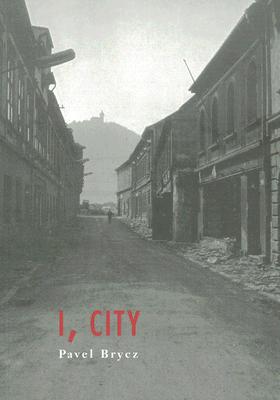
*attribution: book summaries taken from publisher blurbs via Goodreads; some have been truncated; image of I, City sourced from alibris.
Facilitating a book group can be daunting. So, naturally, I wanted to try it.
I submitted a proposal for a short stories book group six months ago, and my library thought it was a good idea. I designed a flyer, wrote a blog post and newsletter blurb to introduce the group, and selected six books for the reading group’s trial period.
I made several mistakes, but during the book group’s introductory period I’ve learned much about supporting readers in a group discussion setting. Preparation is key, but the right level of participation and the right book are equally important aspects of a flourishing fledgling book group.
Preparation
The leader needs to prepare by knowing the basics of the author’s biography and developing open-ended questions that pique readers’ interest. It goes without saying, the discussion leader must have read the book. If there’s time to read it twice (once for pleasure, and one close reading of the text), forming questions will be much easier. It’s essential to read reviews of the book — at the very least those in major sources like The New York Times Book Review, Atlantic Monthly, and New York Review of Books. Many ideas about theme, character, and plot will surface in the reading of reviews — and these elements formed the basis of every list of questions I developed for my group. When developing questions, think in terms of how a reader interacts with a book. When learning how to devise questions for a book group, I started with LitLovers “How To Talk About a Book” article.
Participation
The discussion leader’s role is to get group members talking to one another — asking a variety of questions, interjecting when a theme is being touched on by several group members but isn’t explicitly recognized by any of them, and/or turning the conversation when one member begins to dominate. It’s important to adapt the discussion to the group — considering the group’s size, members’ interests, previous reading experience, et cetera.
My major rookie mistake was assuming that I needed to have answers to all of the questions I posed, and to contribute those opinions to the discussion. To avoid developing a pedagogical tone for the group, the leader should hang back, let the readers drive the discussion, and steer mainly when it veers off topic. The leader should be flexible with the question list — favorite topics may not garner the enthusiasm the leader might have hoped for, the group may not even get to all the questions on the leader’s list, and members may come up with insights very different from those the facilitator has anticipated.
On the other end of the spectrum, the leader should always be prepared to discuss the work in depth, one on one. I once had a single member show up for the group — it was a rainy night, there was a popular event happening in the adjacent room, and parking in the Financial District was especially bad. Though intimidated, I approached the situation as if I were meeting a friend for coffee to talk about a book we’d both read. I posed a single question to get us started, and a true tête-à-tête ensued from there. It was a successful meeting despite an attendance of one.
Selection
A word on book selection: choose materials with broad appeal, especially for the introductory period. My members’ favorite collections were those by Alice Munro, Karen Russell, and Junot Diaz. On the other hand, it’s also worth keeping in mind that even if everyone hates the book, a good discussion might ensue. Don’t shy away from challenging your group with something they may not find accessible. For example, Amy Hempel is one of my favorite authors, but the readers who attended the discussion of The Dog of the Marriage announced immediately that they did not like the collection. I asked pointed questions as we dissected the book story-by-story, and as the hour progressed, attendees talked at great length about the stories’ complexity. At the end of the discussion, one member asked whether I liked the book; when I revealed that it was one of my top ten favorite books of all time, the group reacted with shock and awe. From my perspective, it was a coup that they couldn’t tell what my opinion was throughout the conversation — and that we had engaged in a sophisticated discussion of the themes and details of Hempel’s delicate work despite the group’s collective “dislike” of the book.

The most important thing I’ve learned about leading a reading group is to think of it as a discussion, because that’s what it is — an exploration of the worlds contained within words. Each meeting will be different based on who’s in attendance and the book on the table. Strong familiarity with the book, respect for each members’ contributions, a willingness to let the discussion unfold, and the ability to adapt to readers’ interests are essential in building a thriving reading group.
I attended my first professional conference a few weeks ago. At the California Library Association Annual Conference in Oakland, I met some people I previously knew only virtually, I broadened my horizons in re: the possibilities of using my degree in many different capacities, and I discovered examples of people integrating their professional degrees and other skill sets to build a variegated career path. I got to be present with people who stretch the boundaries of our field and engage with information dissemination in non-traditional ways while keeping focus on the ultimate goal of library work: access.
Also, Daniel Handler. I’ve had a small lit-crush on him ever since I ran the merch table at Kidquake a couple of years ago and he was asking the kids deadpan whether they had a full-time job in a coal mine or went to third grade, then afterward told me he liked my kitchen utensils Tattly. I love the Series of Unfortunate Events (Number 13 kind of broke my heart — in a good way), and in his keynote speech at the CLA conference, the divine Mr. Handler did not disappoint: hilarious as well as inspiring.
Though I’m not quite finished with school yet — people kept introducing themselves as [name], [library] — I found the experience to be useful, in that it opened me up to possibilities I might not have considered otherwise: academic libraries, museums, and archives, oh my! I recommend that library students attend a professional conference during their educational careers — going to a variety of sessions exposes one to the universe of information science professions and professionals, and might even provide a springboard, inspiring new directions in one’s academic career.
A FIRST-TIMER’S CONFERENCE TIPS
attribution: photo courtesy of http://conference.cla-net.org/2014/the-details/highlights/
 Heather Bailey Terrell